
Keeping people informed is a big part of running a safe construction site. It starts when a worker first arrives and continues throughout the project. A clear site induction, followed by regular briefings, helps everyone understand the risks, the site rules and what they need to do to work safely.
Under the Construction (Design and Management) Regulations 2015 (CDM 2015), suitable site inductions must be provided, while workers must also receive the information, instruction, training and supervision needed to carry out their work safely.
Site inductions and toolbox talks play different but complementary roles in meeting these responsibilities.
Starting with a Suitable Site Induction
A site induction should be provided to every worker before they start work and should be specific to the project and the risks present on that particular site.
Rather than simply working through a generic checklist, an effective induction should give workers the information they genuinely need to understand how the site operates and what is expected of them.
Key areas will typically include:
- An overview of the project and site management arrangements
- Site access, pedestrian routes and traffic management
- Welfare and first-aid arrangements
- PPE requirements and site rules
- Restricted or high-risk areas
- Fire and emergency procedures
- Accident, incident and near-miss reporting
- Permit-to-work arrangements where applicable
- Significant site-specific hazards and control measures
- Individual responsibilities for health and safety
- How workers will receive ongoing health and safety information
The HSE also highlights that site rules should be clear, easily understood and brought to the attention of everyone expected to follow them. Where necessary, consideration should be given to workers who may require information in another language.
Visitors may also require an induction, although this can be proportionate to the nature and duration of their visit.
Why the Induction Is Only the Beginning
A site induction provides an important starting point, but construction sites rarely stay the same for long.
Different trades arrive, work areas change, new equipment is introduced and activities can create new or changing risks. Information provided on day one may therefore need to be reinforced or updated throughout the project.
This is where toolbox talks and ongoing briefings become particularly valuable.
The HSE specifically identifies arrangements for briefing workers on an ongoing basis – for example through toolbox talks – as something that should be considered as part of the site induction arrangements.
Choosing the Right Toolbox Talk
Toolbox talks are short, focused safety briefings used to reinforce important messages and address risks relevant to the work being undertaken.
Topics might include:
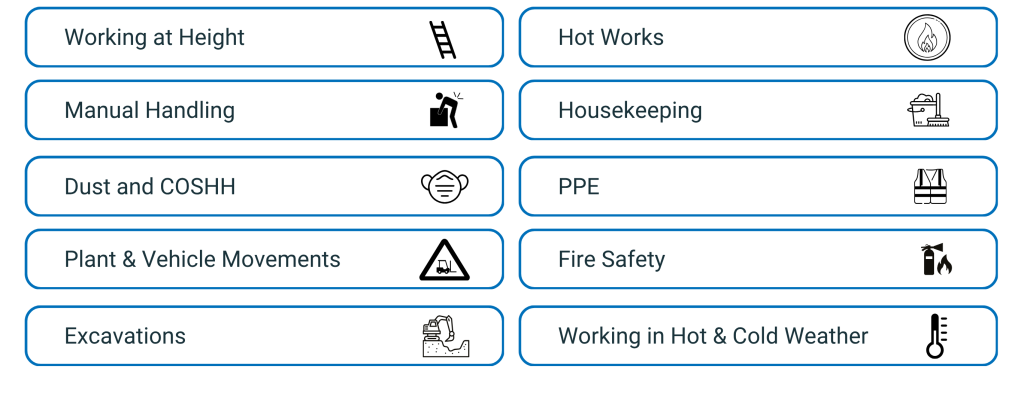
The subject should reflect what is actually happening on site. A brief discussion about a risk workers are about to encounter is likely to be far more useful than delivering a generic talk simply because it appears on a schedule.
Toolbox talks should also support – rather than replace – appropriate training, risk assessments, method statements and supervision.
Making Toolbox Talks Effective
A toolbox talk doesn’t need to become a lengthy classroom session.
Keeping the discussion focused on one subject makes the key message easier to understand and remember. Wherever possible, relate the topic to the actual site, current activities or something workers can see around them.
Encouraging questions can also turn a one-way briefing into a useful conversation. Workers often have practical experience that can help identify problems or improvements before an incident occurs.
...and Make Sure You Keep Clear Records
Keep a simple record of each induction or toolbox talk, including the date, topic covered, who delivered it, who attended and any issues or actions raised. This provides useful evidence that relevant safety information has been communicated and understood.
Building Better Communication on Site
Site inductions and toolbox talks shouldn’t be treated as isolated tick-box exercises.
A good induction establishes the site’s expectations from day one. Regular, relevant briefings then help reinforce those expectations as the project progresses and risks change.
Together, they form an important part of keeping workers informed, engaged and aware of the risks around them – supporting both effective site management and the requirements of CDM 2015.
Need More Guidance?
For further guidance on site rules and inductions, visit the Health and Safety Executive (HSE) guidance:
🔗 HSE – Site Rules and Induction
Free Site Induction Download
We’ve also created a free Site Induction [Checklist/Template] to help you cover the key information workers should receive when arriving on a construction site.
[Download your free Site Induction resource]
✔ Construction Phase Plans
✔ Risk Assessments & Method Statements
✔ Pre-Construction Information
✔ Site Audits
✔ Health & Safety Files
✔ Construction Management Plans
✔ NEW CDM Principal Designer
Read more...
-

How Toolbox Talks & Site Inductions Make Construction Sites Safer
September 1, 2026 Building -
Temporary Works: Why They Matter More Than You Think
July 23, 2026 Building