Hot weather can create serious health and safety risks on construction sites. High temperatures, direct sunlight, physically demanding work, and dehydration can lead to heat stress, fatigue, reduced concentration, and potentially life-threatening conditions if not properly managed.
With the UK currently experiencing an unusually warm and record-breaking spell for May, contractors, site managers, and employers should take practical steps to protect workers from the risks associated with prolonged heat exposure on site.
The Health and Safety Executive (HSE) guidance on heat stress provides useful advice for employers and contractors on managing hot working conditions and recognising the risks associated with heat exposure. During periods of unusually high temperatures, staying informed and reviewing site controls can help ensure workers remain safe, hydrated, and properly protected.
Why Heat Stress Is a Serious Site Risk
Construction workers are often exposed to conditions that increase body temperature quickly. Activities such as roofing, groundwork, scaffold work and roadworks can place additional strain on the body.
When workers become dehydrated or overheated, concentration levels can drop and fatigue increases. This can lead to poor decision-making, reduced awareness, and a higher likelihood of accidents on site. In more serious cases, heat stress can develop into heat exhaustion or heat stroke, both of which require immediate attention.
Recognising the Early Warning Signs
One of the biggest dangers with heat stress is that symptoms can sometimes be overlooked until a worker becomes seriously unwell. During periods of hot weather, site teams should remain alert to the early warning signs of dehydration and overheating, particularly during physically demanding tasks or prolonged sun exposure.
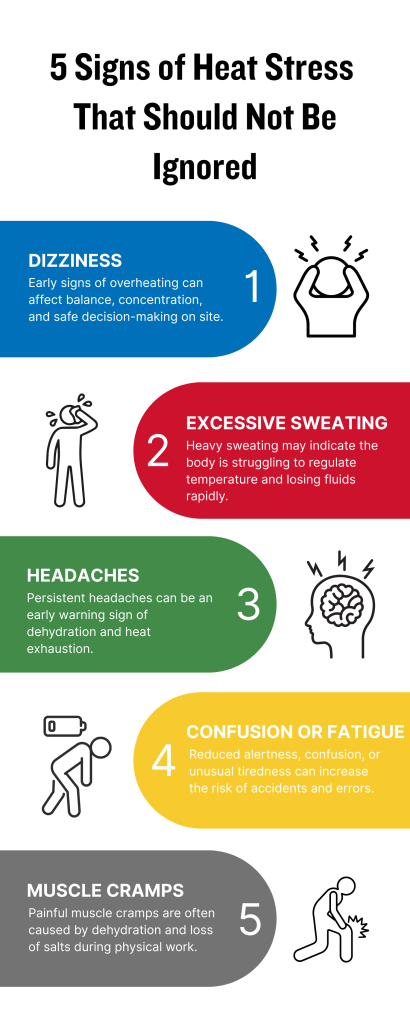
Common symptoms can include headaches, dizziness, excessive sweating, fatigue, muscle cramps, and confusion. Workers may also become irritable, lose concentration, or appear unusually tired during routine tasks, increasing the risk of accidents and poor decision-making on site.
Regular supervision and open communication are essential during hot conditions and workers should feel confident reporting symptoms early before conditions worsen.
The infographic below highlights five common signs of heat stress that site managers and supervisors should never ignore.
Practical Steps for Managing Hot Weather on Site
During hot periods, simple control measures can make a significant difference to worker safety and wellbeing. The HSE recommends reviewing working arrangements and adapting site activities where necessary to reduce heat exposure.
Many contractors now adjust working patterns during extreme heat by scheduling more demanding activities earlier in the morning and avoiding peak afternoon temperatures where possible. Easy access to cool drinking water is also essential during hot weather, particularly for workers carrying out manual or high-exertion tasks. Where possible, shaded working areas can help reduce direct sun exposure throughout the day.
Supervisors should also encourage workers to remove unnecessary PPE during breaks where it is safe to do so, helping the body cool more effectively before returning to work. Just as importantly, workers should be encouraged to report symptoms early before conditions worsen.
Working in Direct Sunlight
Extended exposure to sunlight can also create longer-term health risks for construction workers. As well as causing sunburn and dehydration, repeated UV exposure can contribute to premature skin ageing and increase the risk of skin cancer over time.
Where possible, workers should use suitable sun protection measures, like sunscreen, appropriate clothing, and shaded rest areas during prolonged outdoor work.
The Importance of Planning and Communication
Hot weather risks should be considered as part of routine site planning, particularly during summer months or periods of extreme temperatures.
Daily briefings and toolbox talks provide a good opportunity to remind workers about hydration, sun exposure, fatigue, and the symptoms of heat stress. Supervisors should also monitor workers more closely, especially those carrying out physically demanding activities.
Good communication here is essential and a strong site culture where workers look out for one another can help identify early signs of heat-related illness before it becomes a serious emergency.
CDM Duties and Worker Welfare
Under CDM 2015, duty holders must ensure construction work is properly planned, managed, and monitored. This includes considering environmental conditions that may affect health and safety on site. Suitable welfare arrangements, access to drinking water, rest facilities, and appropriate supervision all form part of effective hot weather management. Heat stress shouldn’t be viewed as an occasional issue, but as a genuine construction safety risk that requires proactive management.
Need Support Managing Health & Safety on Site?
At Safety CDM, we support contractors, developers, and site teams with practical health and safety advice tailored to real construction environments. With periods of extreme heat become more common across the UK, proactive heat stress management is becoming an essential part of keeping construction sites safe.
If you need support with CDM compliance, site safety, risk management, or construction health and safety documentation, our team is here to help.
Contact us today to discuss your project requirements.
✔ Construction Phase Plans
✔ Risk Assessments & Method Statements
✔ Pre-Construction Information
✔ Site Audits
✔ Health & Safety Files
✔ Construction Management Plans
✔ NEW Principal Designer
(BSA Regulations) Services Available
More from the Safety CDM Blog...
-

Managing Multiple Contractors Under CDM 2015: Best Practices
September 29, 2026 Building -
Principal Designer vs CDM Advisor: Do You Know the Difference?
September 14, 2026 Building -
How Toolbox Talks and Site Inductions Make Construction Sites Safer
September 9, 2026 Building -
Temporary Works: Why They Matter More Than You Think
July 23, 2026 Building