If you happen to walk past a construction site you’ll more than likely see them. Temporary Works are present on almost every construction project, yet they’re often one of the least understood aspects of construction safety.
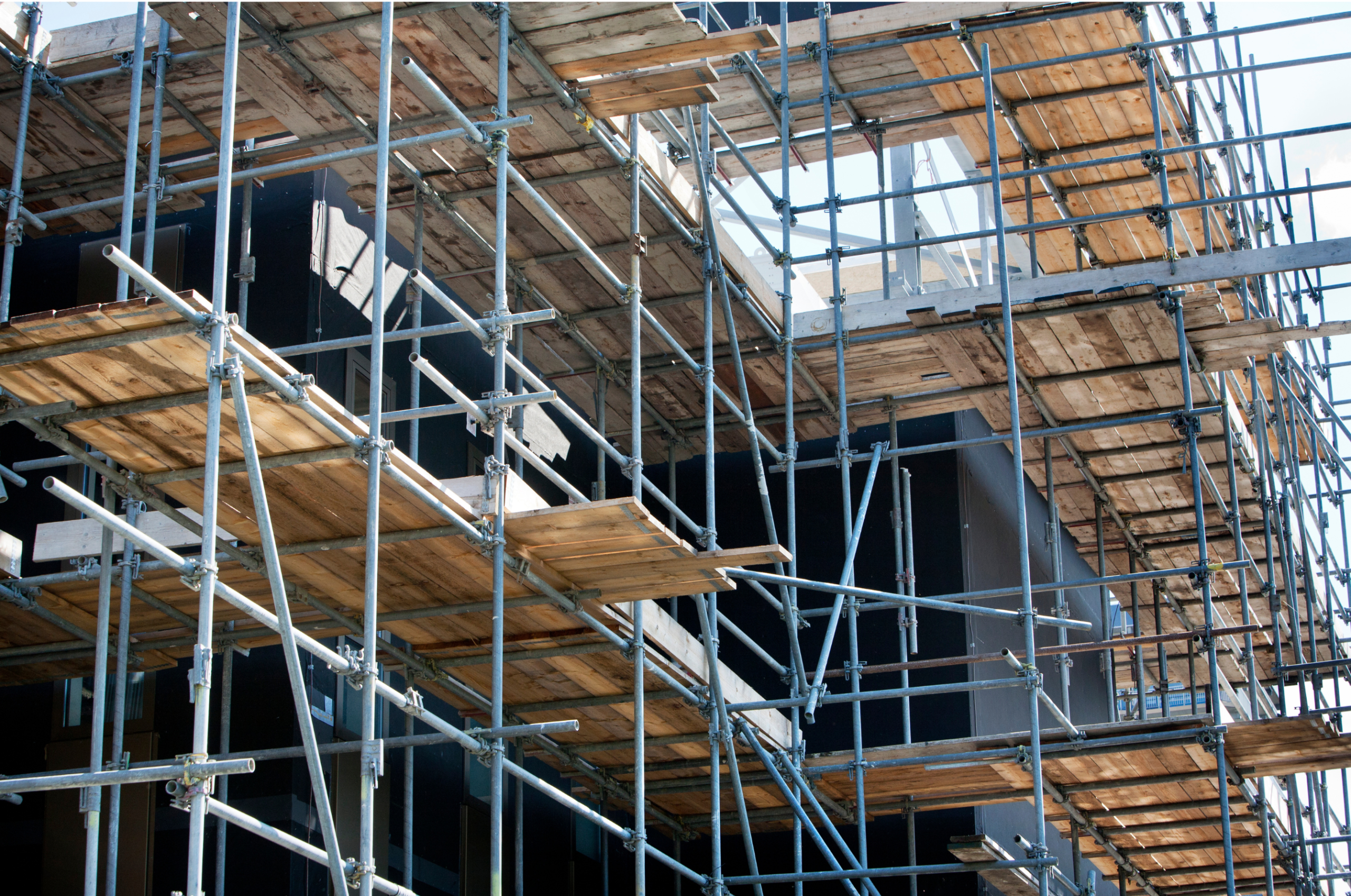
Scaffolding surrounding buildings. Excavations held open with shoring. Tower cranes lifting materials overhead. Hoardings protecting the public. Temporary edge protection keeping workers safe at height.
These are all examples of Temporary Works, which are essentially short-term engineering solutions that make it possible to construct the permanent building or structure safely. They only exist for part of a project, meaning they’re sometimes viewed as secondary to the permanent structure, but even so, they can present some of the highest risks on site and require the same level of planning, design and management as the permanent works themselves.
What are Temporary Works?
Temporary Works are the structures, systems and equipment required to safely build the permanent works. Unlike the completed building, bridge or retaining wall, contractors remove them once they’ve fulfilled their purpose. However, on occasion, they may become part of the finished project.
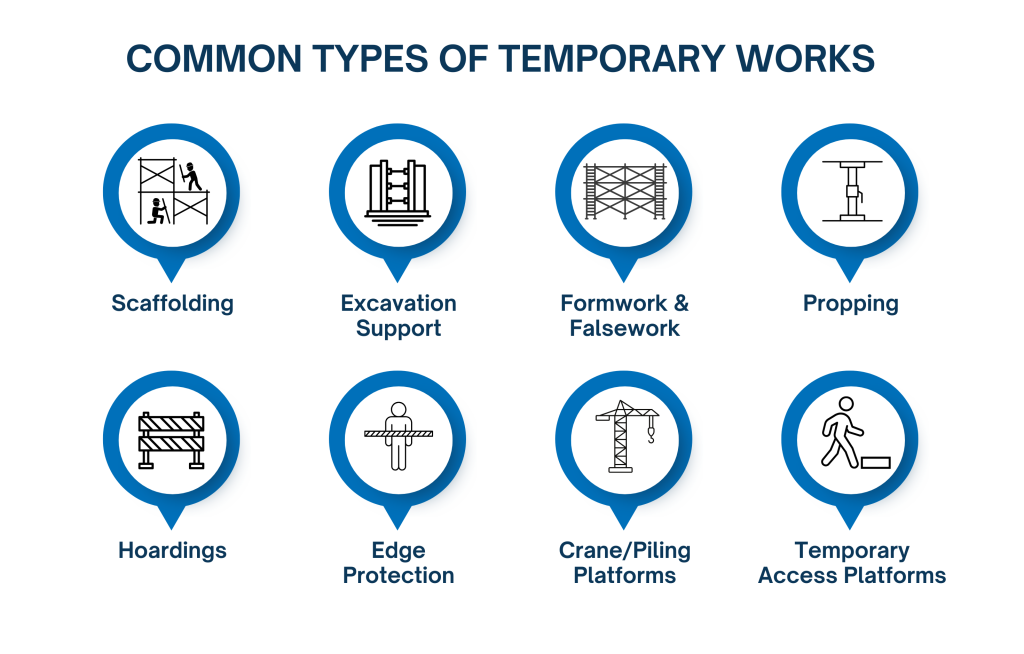
Temporary Works take many forms, but they all have one thing in common – they allow for permanent structures to be built safely and efficiently.
Why It Matters for Construction Safety
These engineering solutions are often among the highest-risk activities on a construction project. Unlike permanent structures, they are frequently installed, altered and dismantled as work progresses. Site conditions change, programmes evolve and sequencing may be adjusted. Every change has the potential to affect how Temporary Works perform.
When the works are poorly planned, inadequately designed or altered without proper control, the consequences can be significant. Failures can lead to structural collapse, excavation instability, falls from height, damage to neighbouring structures, project delays and, most importantly, serious harm to workers or members of the public.
Temporary Does Not Mean Less Important
Although Temporary Works are, as they state, ‘temporary’, the engineering behind them should never be treated as such. They require careful planning from the outset, with clear design assumptions, accurate load calculations and controlled installation. Changes that occur during the project should be properly assessed, and their removal should be planned just as carefully as their installation. And by treating these works with the same level of care as permanent works, you will not only improve safety but also help avoid delays, costly rework and unnecessary disruption to the programme.
Who is Responsible?
Every project should ensure Temporary Works are properly planned, coordinated and managed. On larger or more complex projects, this is often achieved through the appointment of a Temporary Works Coordinator (TWC), following the principles set out in BS 5975, which is recognised as industry good practice.
While there is no legal requirement to appoint someone with this specific title, there is a legal duty to ensure Temporary Works are managed safely by competent people.
Managing Temporary Works
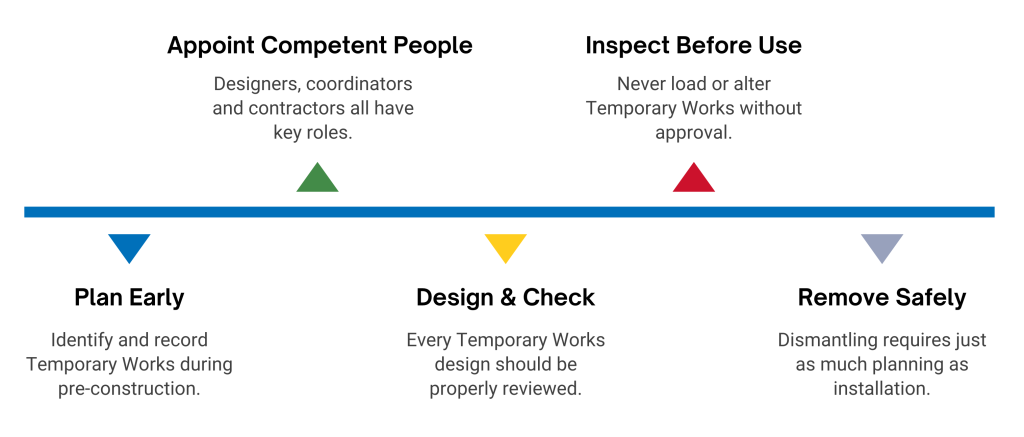
Well-managed Temporary Works follow a structured process throughout the project.
A typical approach includes:
Temporary Works and CDM
Although Temporary Works are often associated with contractors, they are closely linked to the wider duties under CDM 2015.
Designers should consider how Temporary Works will be required during construction and seek to eliminate or reduce foreseeable risks where possible.
Principal Designers should encourage early collaboration between the design team and those responsible for Temporary Works where significant risks are anticipated.
Principal Contractors are responsible for planning, managing and monitoring the construction phase, ensuring Temporary Works are coordinated, installed and maintained safely.
When everyone understands their role, Temporary Works become an integral part of project planning rather than an afterthought.
Temporary Works may only be in place for a matter of days or weeks, but their impact on safety, programme and project success can be significant. Giving them the attention they deserve from the outset helps reduce risk, improve coordination and keep projects moving safely.
Whether you’re planning a new project or managing works already on site, taking a proactive approach to Temporary Works can make all the difference. If you’d like advice on your CDM duties, Principal Designer services or wider construction health and safety support, Safety CDM is here to help.
✔ Construction Phase Plans
✔ Risk Assessments & Method Statements
✔ Pre-Construction Information
✔ Site Audits
✔ Health & Safety Files
✔ Construction Management Plans
✔ NEW CDM Principal Designer
Further reading: The HSE provides additional guidance on the management of Temporary Works, including roles, responsibilities and industry good practice. You can read it here.
You May Also Be Interested In...
-

Managing Multiple Contractors Under CDM 2015: Best Practices
September 29, 2026 Building -
Principal Designer vs CDM Advisor: Do You Know the Difference?
September 14, 2026 Building -
How Toolbox Talks and Site Inductions Make Construction Sites Safer
September 9, 2026 Building -
Temporary Works: Why They Matter More Than You Think
July 23, 2026 Building