
Construction projects often involve several contractors and specialist trades working on site at the same time. Managing multiple contractors under CDM 2015 requires effective planning, communication and coordination to ensure their activities are carried out safely. While each contractor is responsible for managing their own work safely, CDM 2015 also requires effective coordination between those involved.
When activities overlap, poor communication or planning can quickly introduce additional risks. So, how should multiple contractors be managed effectively?
Who is Responsible for Coordinating Multiple Contractors?
Where a project involves more than one contractor, the client must appoint a Principal Contractor to plan, manage, monitor and coordinate health and safety during the construction phase. The Principal Contractor provides a central point for coordination, helping to ensure contractors cooperate and properly manage their activities. Although, appointing a Principal Contractor does not remove the responsibilities that each contractor has for the work under their control.
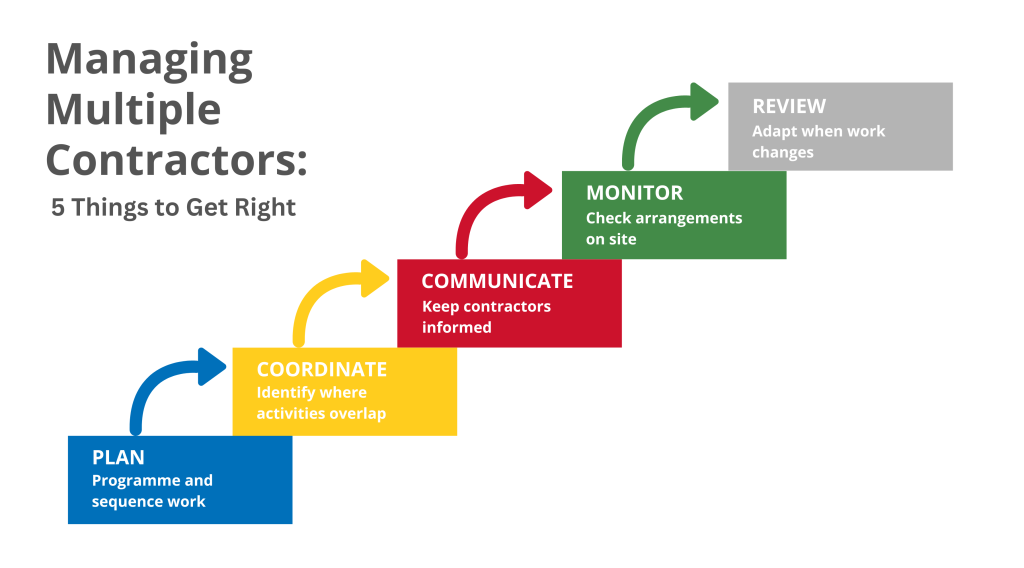
Plan Before Work Starts
Good coordination starts before contractors arrive on site, beginning with the Construction Phase Plan. This should set out the arrangements for managing health and safety and be appropriate to the size and complexity of the project. Contractors also need the information necessary to plan their own work safely.
Programming and sequencing are particularly important where several trades are involved. This needs to consider who will be working where, what activities could overlap and whether one contractor’s work could introduce a risk to another.
Particular attention should be given to activities such as:
Work at height taking place above other trades
Lifting operations affecting surrounding work areas
Deliveries and vehicles sharing routes with pedestrians
Temporary Works that affect other contractors
Excavations restricting access or introducing new hazards
Electrical or mechanical isolations affecting several trades
Looking at each activity individually isn’t always enough. The risks created by contractors working alongside, above, below or after one another also need to be considered.
Keep Everyone Informed
Site conditions, programmes and working arrangements can change quickly. When risks change. information needs to reach everyone who may be affected. Site inductions, toolbox talks, coordination meetings and daily briefings can all help, but communication should be proportionate to the project and the work being undertaken. Most importantly, contractors need to know when something changes that could affect how they carry out their work safely.
Monitor and Review
The Principal Contractor should monitor how arrangements are working in practice and review them as the project progresses. The Construction Phase Plan should also be reviewed and revised where necessary so that it remains suitable for the work taking place.
Contractors have their own part to play by cooperating with the Principal Contractor, coordinating with others and raising issues that could affect health and safety.
What if More Than One Project Shares a Site?
More than one construction project can take place on the same site, each with its own Principal Contractor. Where their work could affect one another, the Principal Contractors must cooperate and coordinate their activities, including the management of shared areas such as site access and traffic routes.
For further guidance, see the HSE – Managing Health and Safety in Construction (L153).
Good Coordination Makes the Difference
Managing multiple contractors isn’t just about making sure each contractor works safely in isolation. It’s vital to look at the project as a whole and plan how different activities interact, keep everyone informed and review arrangements as the work progresses.
Need support coordinating health and safety on your project?
Safety CDM provides practical CDM support to help clients, designers and contractors understand their responsibilities and manage health and safety effectively.
✔ Construction Phase Plans
✔ Risk Assessments & Method Statements
✔ Pre-Construction Information
✔ Site Audits
✔ Health & Safety Files
✔ Construction Management Plans
✔ NEW CDM Principal Designer
More from the Safety CDM blog...
-

Managing Multiple Contractors Under CDM 2015: Best Practices
September 29, 2026 Building -
Principal Designer vs CDM Advisor: Do You Know the Difference?
September 14, 2026 Building -
How Toolbox Talks and Site Inductions Make Construction Sites Safer
September 9, 2026 Building -
Temporary Works: Why They Matter More Than You Think
July 23, 2026 Building