
As the festive season approaches, construction sites across the UK are preparing for a well-earned break. With shorter days, colder temperatures, and the year-end rush to finish up, it’s easy to focus on tying up loose ends. But before finishing up for the year, there’s one more thing that needs your attention – the site might go quiet, but safety still needs your attention.
Even during downtime, sites remain vulnerable to theft, unauthorised access, exposure to hazards, and public safety issues which is why now is the time to prepare.
This blog shares practical, often-overlooked tips to help you shut down your site safely and avoid unwanted surprises over the holidays – including a handy PDF checklist you can print and use
Why Site Security Over the Holidays Matters
Christmas is likely to be the longest continuous closure period for construction sites all year meaning:
Fewer people around to spot issues
Greater risk of trespass and theft
Increased likelihood of bad weather
Higher chance of public access or damage going unnoticed
A 2014 study by secure storage supplier Mobile Mini, using police data, found over 6,000 construction sites are hit by break-ins each year, and in 21% of cases, they were simply left unsecured or with easily bypassed fencing.
Wrap things up right this year – so you’re not facing problems in the new one.
Six Steps for a Safe and Secure Christmas Shutdown
1. Start With a Risk Assessment
Begin with a review of:
Site-specific risks (location, surrounding area, project phase)
How long the site will be closed
What could realistically go wrong in your absence?
From there, build a clear shutdown plan – including who’s responsible, when checks should be done, and what final actions are needed before closing up. Try to avoid last-minute checks – they’re easy to rush or miss when everyone’s ready to sign off.”
2. Strengthen Your Security Measures
It’s not enough to rely on a padlock and a plywood gate, so make sure:
Perimeter fencing is solid, stable, and not easy to climb
Access points are locked and not easily tampered with
CCTV, lighting and alarms are active and tested
Some higher-risk sites – such as those in urban areas, with valuable plant, or partially completed works – may need additional protection over the shutdown period. This could include temporary monitored CCTV, concrete barriers at access points, or scheduled security patrols.
You have a legal duty under CDM and health & safety law to prevent unauthorised access – not just to protect the site, but to protect the public.
3. Lock Away Tools, Equipment and Materials
Opportunists target unattended construction sites, especially when they spot visible tools, machinery or materials. To mitigate this:
Remove valuable tools and small equipment from site
Lock everything that stays in secure containers or compounds
Hide large equipment from view and immobilise it
Use trackers on high-value items if you can
And don’t forget: remove fuel, isolate batteries, and lock cabins securely.
4. Weatherproof and Storm-Proof the Site
Whether we get snow, storms, wind, or rain – all can cause serious damage if you’re not prepared.
Check and secure:
Scaffold structures – tie down and check fixings
Temporary hoardings or signage – brace or remove
Materials and debris – store neatly and away from the perimeter
Tarps, sheeting or waterproofing – protect exposed areas
Also, clear drains, gutters and gullies to avoid flooding during heavy rain.
5. Remove Fire and Arson Risks
Unattended sites can be a magnet for arson. You can reduce the risk by:
Clearing all rubbish and flammable waste
Locking away fuel and chemicals
Keeping skips away from buildings and fences
Sites in urban or busy areas may face more risk, so consider speaking with nearby businesses – if they’re open over the break, they may spot issues early and help raise the alarm.
6. Appoint a Security Contact (or Hire Support)
Even with a solid plan in place, things can still go wrong. Every site – not just high-risk ones – should have someone checking in over the break. Assign an out-of-hours contact and make sure their details are clearly displayed on site.
Alternatively, for larger or high-risk sites, you might hire a professional security firm for the break or use live CCTV monitoring or motion alerts.
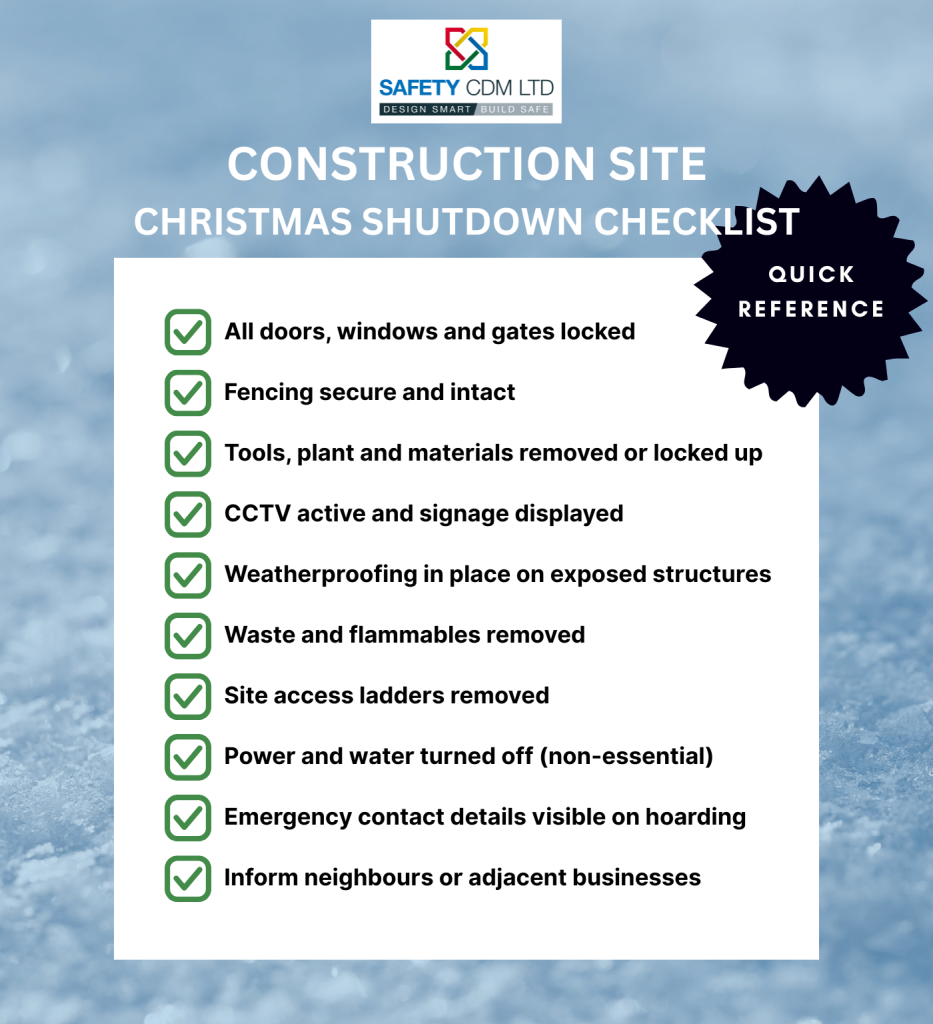
Why Christmas Site Security Still Matters
Construction-related crime typically increases over the festive period – and with Christmas marking the longest site closure of the year, it’s a prime window for theft, vandalism, and trespass.
Add in the darker evenings, and the risks rise even further. Fewer daylight hours and quiet sites create more opportunity for unauthorised access.
But theft and trespass aren’t just security issues – they create serious safety risks which can lead to tampered plant, damaged barriers, or exposure to hazardous areas, putting the public and your project at risk.
That’s why planning a proper shutdown isn’t just about protecting assets, equally it’s about safeguarding people.
Need a Practical Tool to Support Your Shutdown?
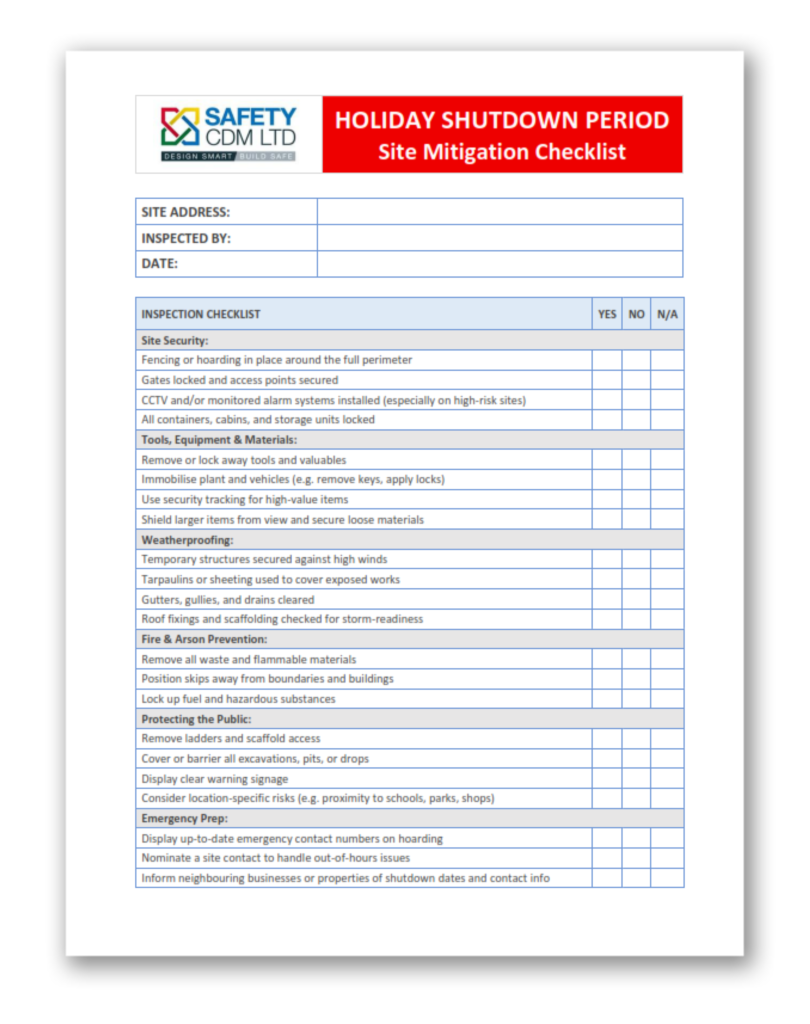
To make planning easier, we’ve created a Holiday Shutdown Period: Site Mitigation Checklist – designed to help you walk through every key security and safety check before leaving your site over Christmas.
📄Download the checklist here.
Use it during your final walkaround to make sure nothing gets missed before the gates close.
FREE DOWNLOAD
“It shall be the duty of every employer to conduct their undertaking in such a way as to ensure, so far as is reasonably practicable, that persons not in their employment… are not exposed to risks.”
Health and Safety at Work etc. Act 1974
Christmas should be a time to relax – not worry about what’s happening back on site.
A well-planned shutdown gives you peace of mind and helps protect your people, your project, and the public.
If you need support securing your site or want help planning your construction shutdown safely, we’re here to help.

You Might Also Like…
-

CDM 2015: Do Domestic Projects Need to Comply?
January 15, 2026 Building -
How to Shut Down Your Construction Site Safely Over Christmas
December 8, 2025 Building